
Cut a panel, heat the hall
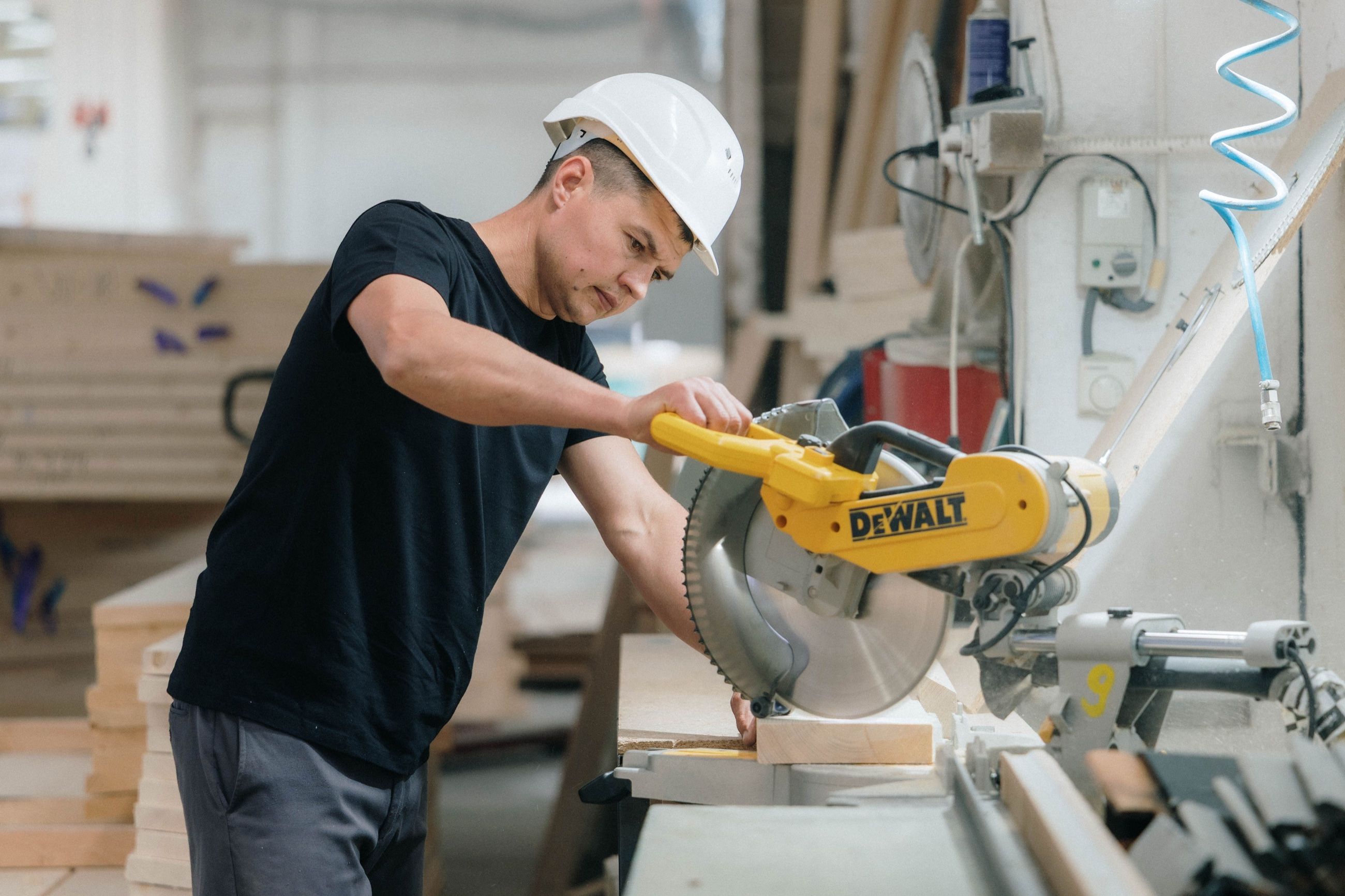
Producing timber-frame panels generates offcuts by definition. On a building site they would end up in a skip. In Uniqa's factory they are collected and burned to heat the production halls, and every other material is separated into its own waste stream. Same leftover, different fate, because a factory can close the loop.
The saw comes down, the panel keeps the length it needs, and the rest drops away. An offcut. Producing prefabricated timber-frame walls generates them by definition: every panel cut to size leaves timber that will never be part of a wall. Follow one of those pieces and it tells you how the factory works.
It heats the hall it was cut in
It does not go into a skip. Wood offcuts from production are collected and burned to heat the production halls, the same halls the panels are assembled in. Residual timber becomes heat for the next shift, the factory buys in less outside energy, and no truck hauls the wood away as waste.
Residual wood does not leave the factory as waste. It re-enters the system as heat for the production halls, a loop built into how production is organised, not added after the fact.
Everything else gets its own stream
Wood is the loop that closes inside the building. Other materials leave, but not mixed together: each type is separated and routed into its own waste stream, matched to the infrastructure that exists for it. That routing is adjusted step by step, so the non-recoverable fraction stays limited and the share that can be reused keeps widening.
Why a factory can do this and a building site cannot
On a building site, cutting happens everywhere and the waste lands together: offcuts, trimmings and packaging in one container. Pulling that apart afterwards is a cost few budgets carry, so mostly it stays mixed. In a factory, cutting happens in fixed places. The same saws stand next to the same collection points every day, and sorting is part of the workstation, not a cleanup at the end.
Industrial production has a second advantage: it can count. The volumes coming off the saws are measurable, and every adjustment to the process can be documented against them. On a site, waste is an estimate. In a factory, it is a number.
None of this carries a slogan. It is what an industrialised process makes possible: waste streams regular enough to measure and close enough to the saw to be routed somewhere useful. The discipline that routes an offcut is the discipline that builds a wall.